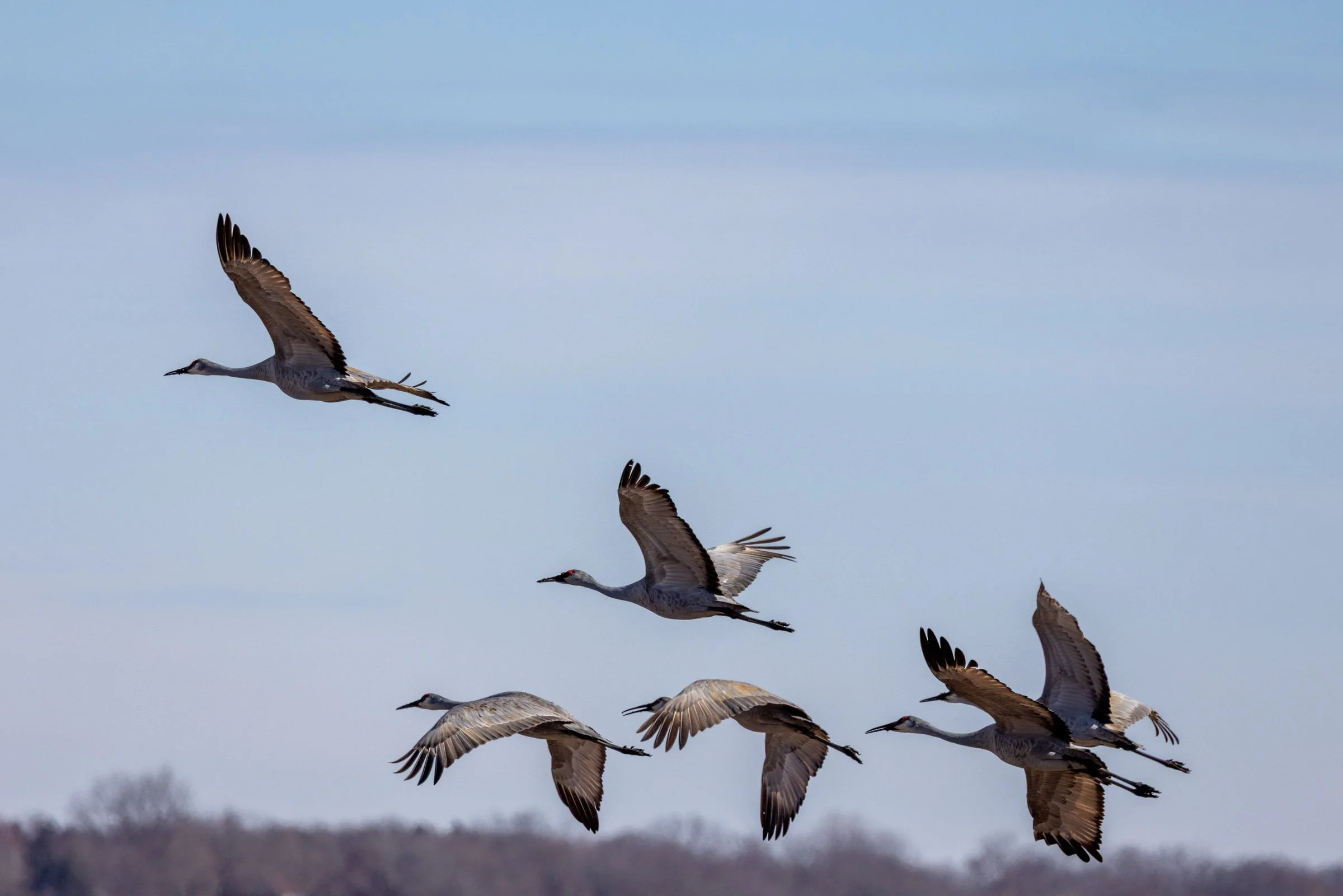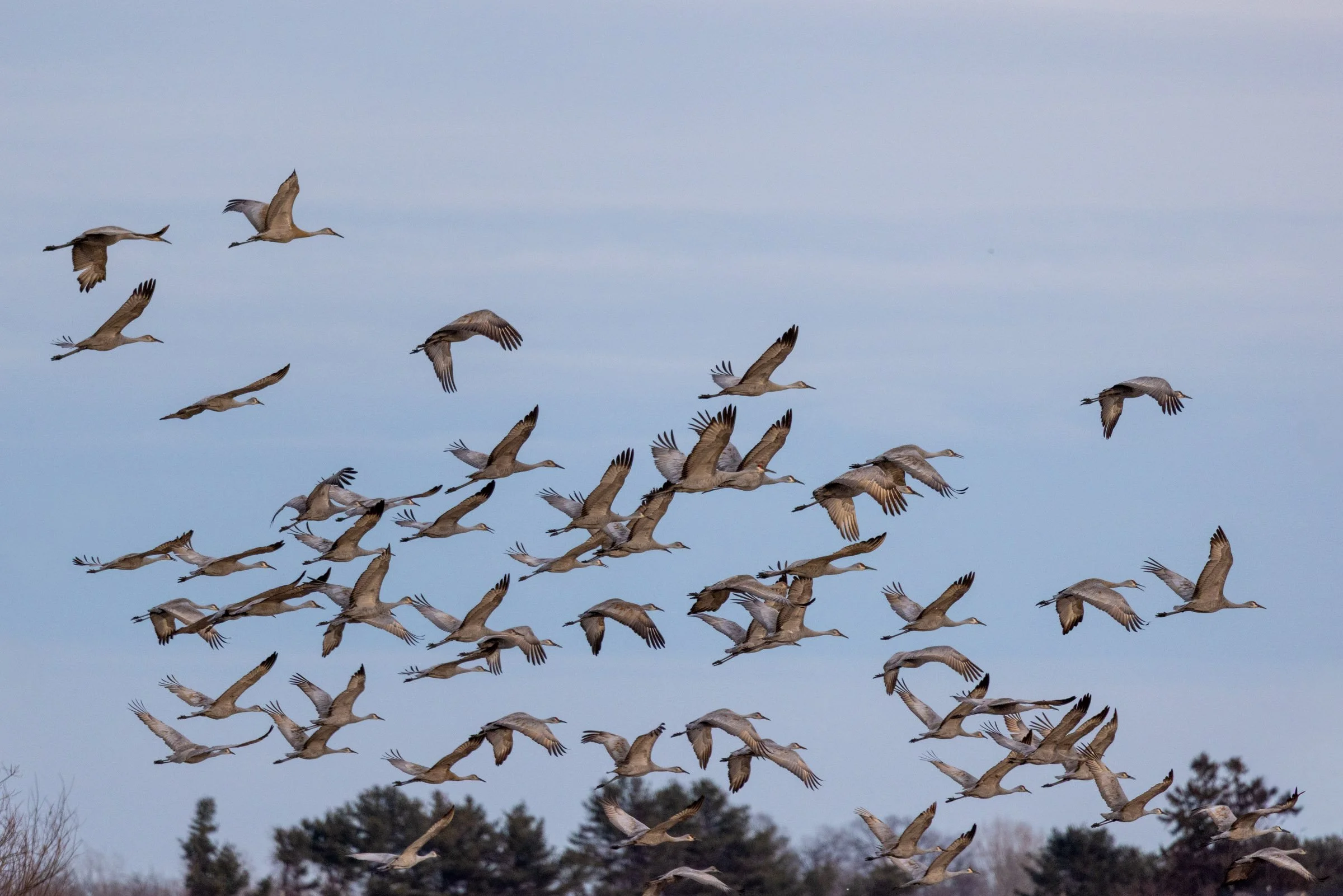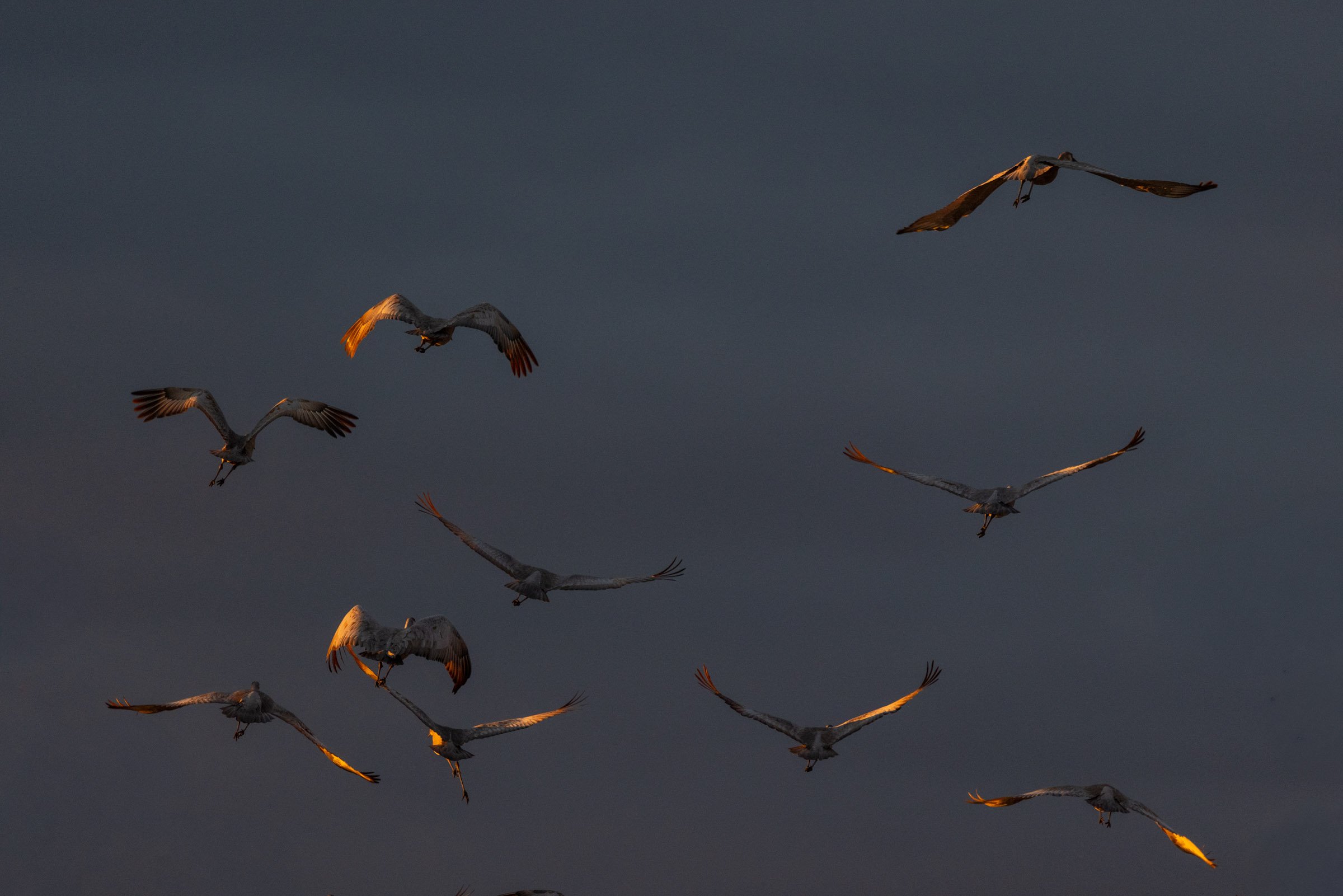
Each year, thousands of Sandhill Cranes pass through Long Point, delighting birdwatchers and contributing to the region’s importance as a significant migratory flyway. Their presence highlights the area’s biodiversity and the critical need to conserve such habitats for migratory species.

Courtship Display
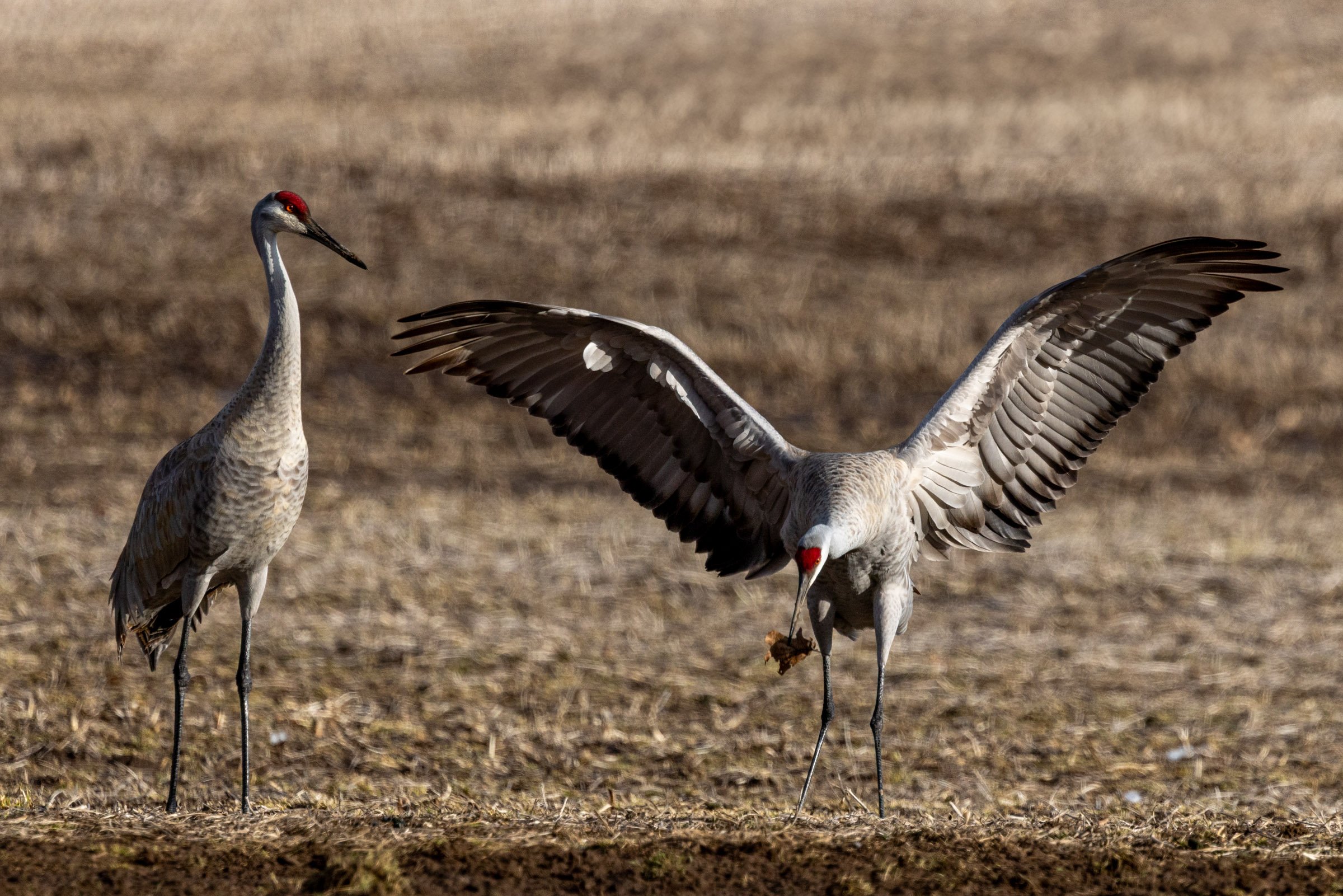
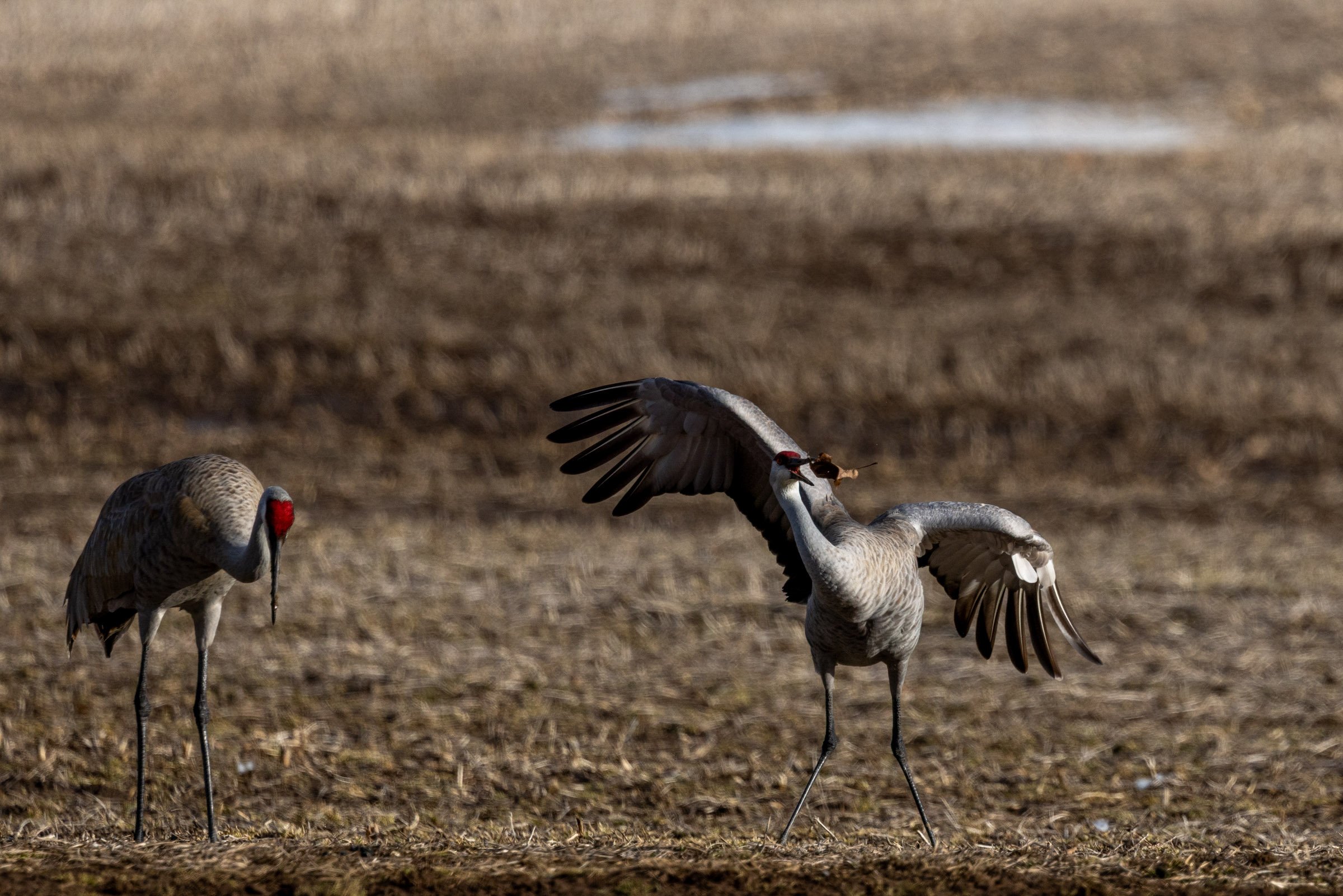
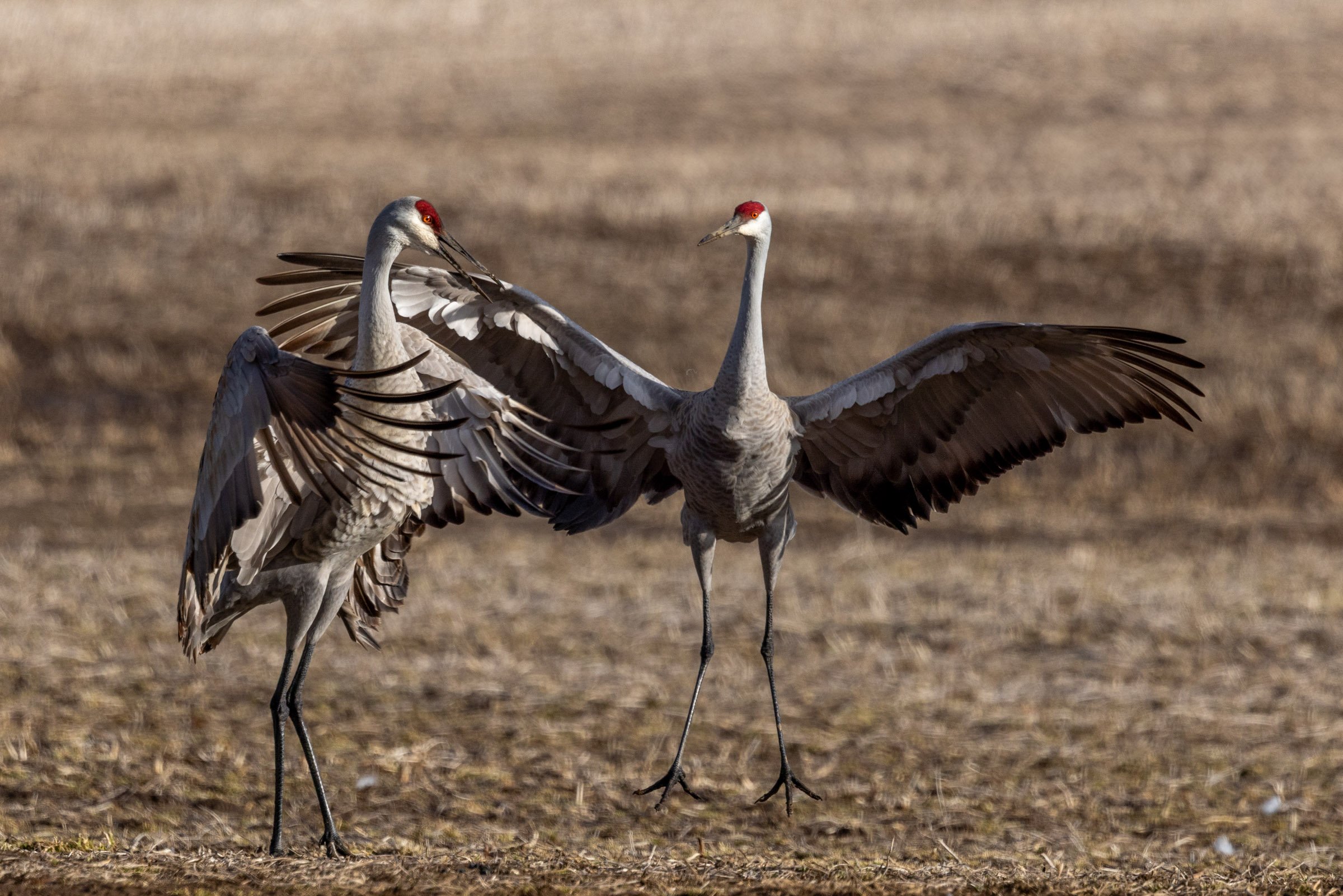
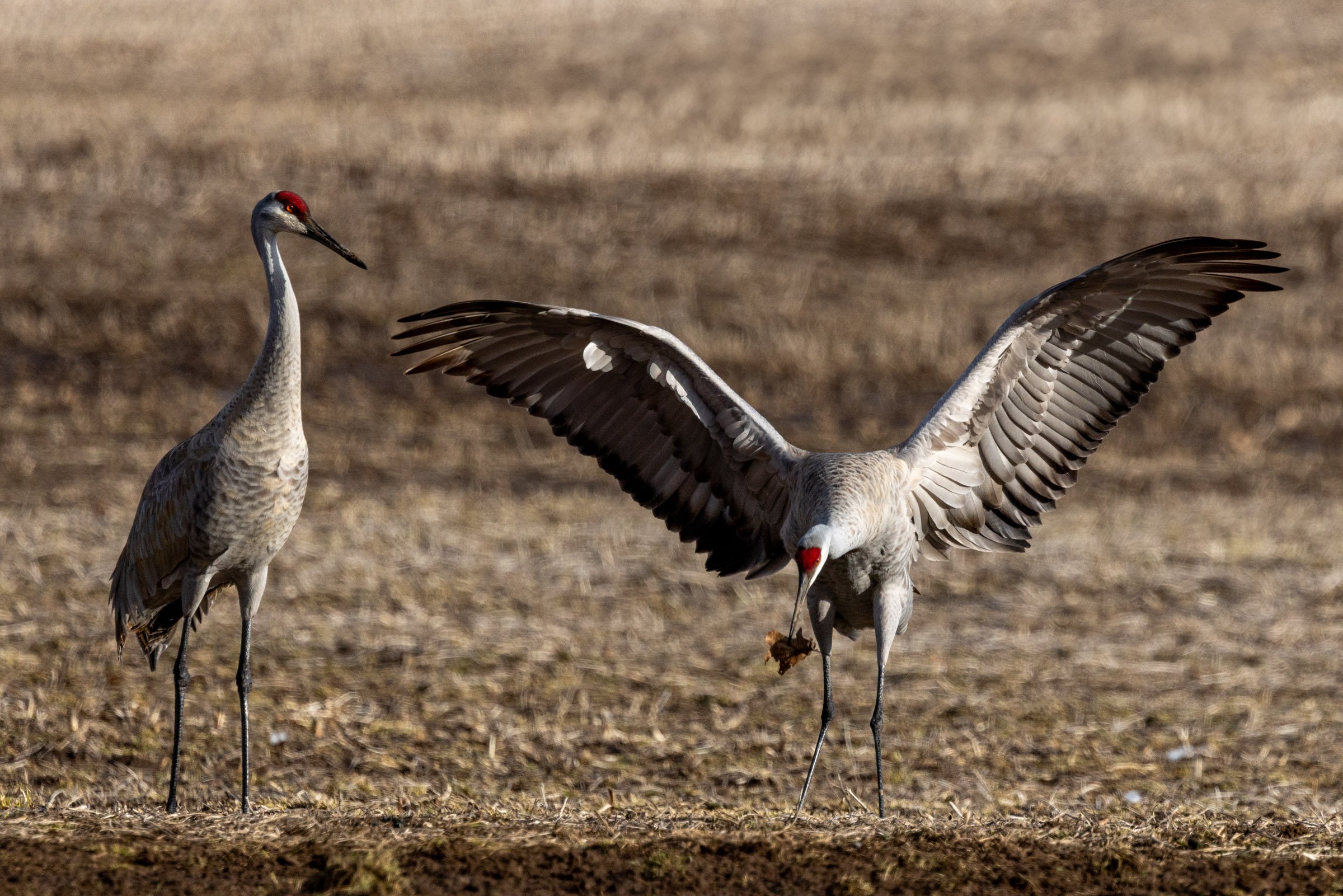
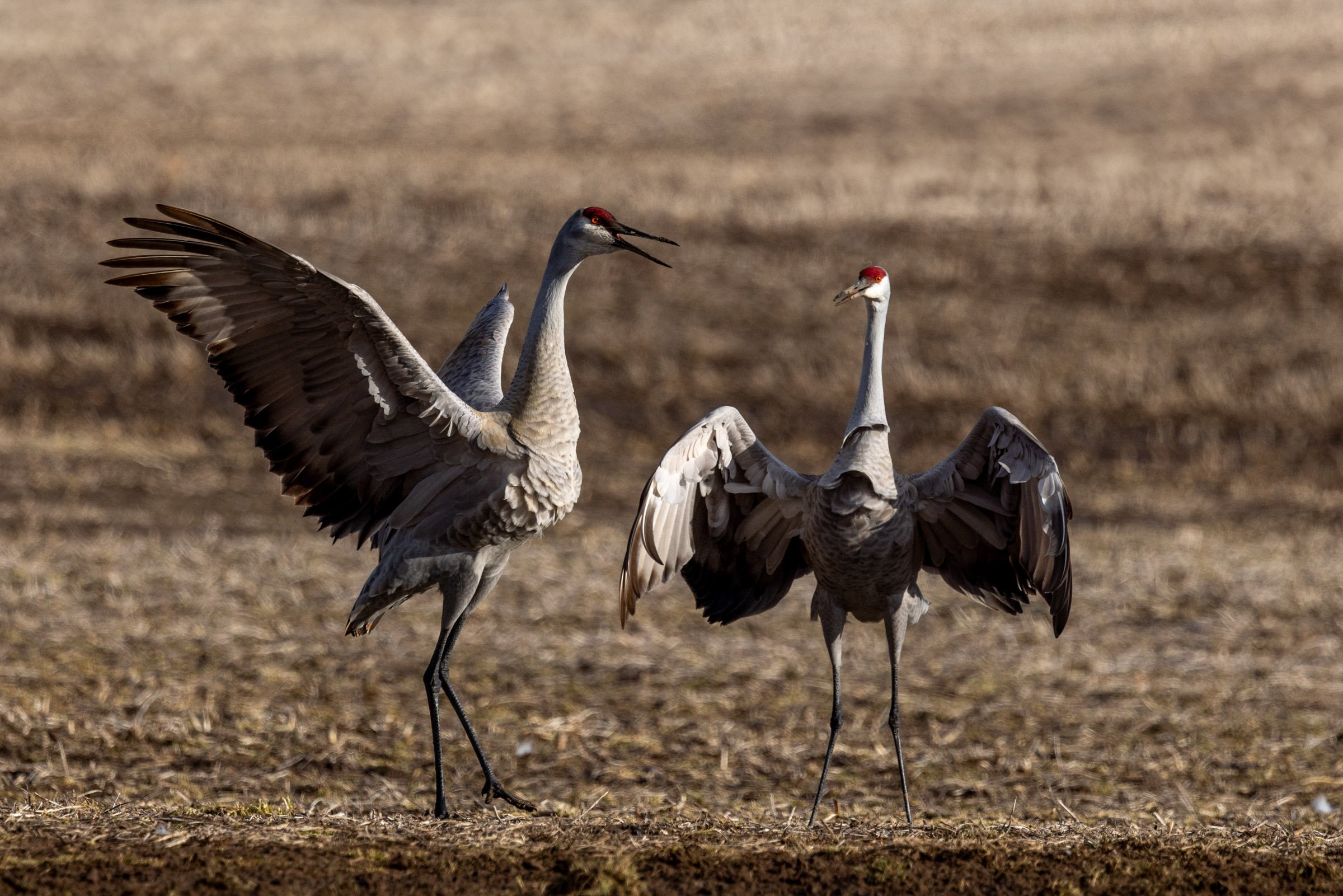
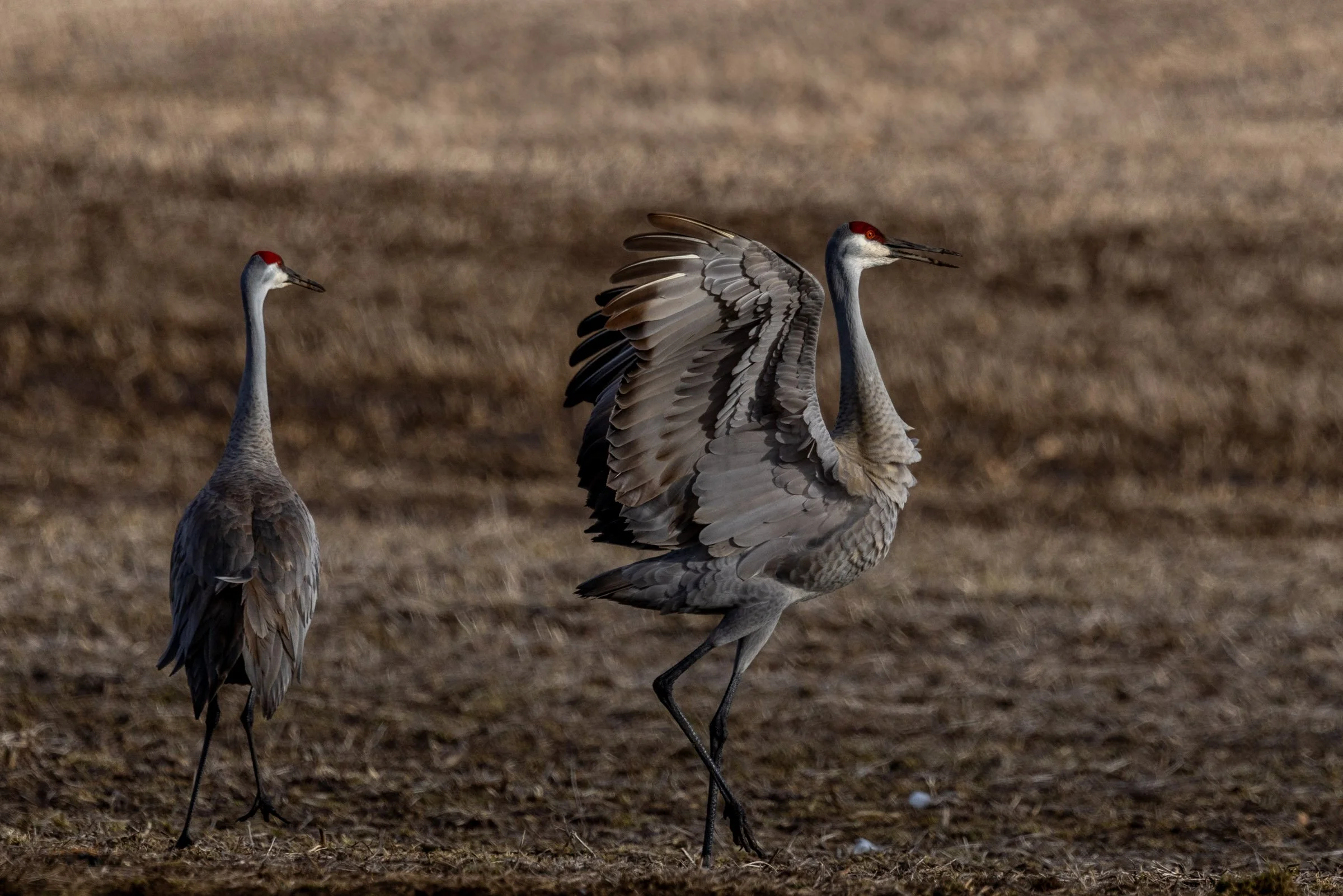
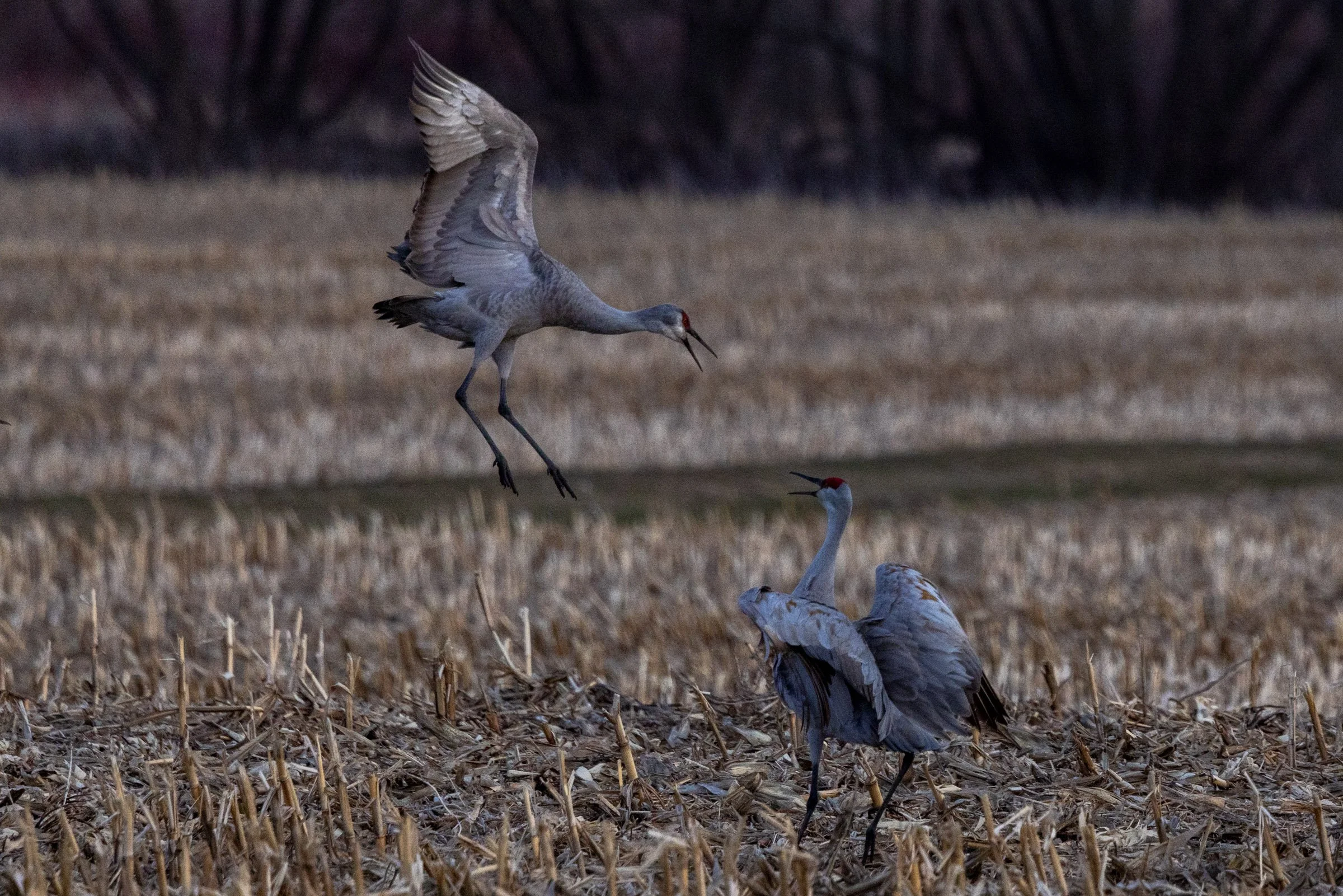
The courtship of Sandhill Cranes is both ritual and performance. When a male seeks a female’s attention, he may raise his wings, bow, leap, and circle in a display that is at once energetic and precise. These movements are often accompanied by loud, resonant calls that carry across the marsh.
Bowing is a central gesture in this exchange, signaling attention, readiness, and intent. At times, the male may also offer grasses, sticks, or food, small acts that help establish and strengthen the bond between the pair.
Their vocalizations are equally important. Sandhill Cranes are known for their powerful, trumpeting calls, and pairs may join in synchronized duets that deepen their connection while marking their presence within the landscape.




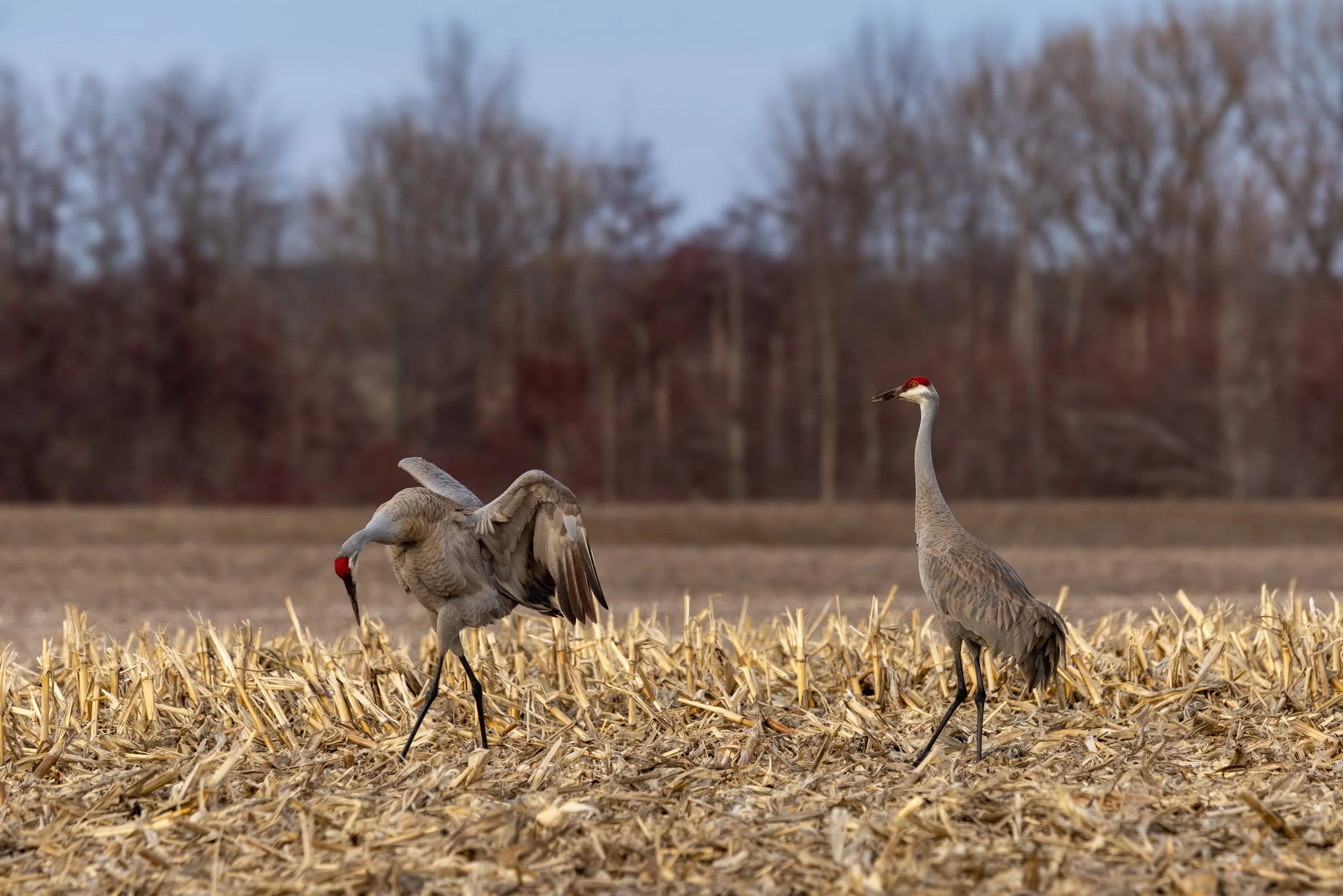
Young Sandhill Cranes, known as colts, begin life distinct in appearance, their soft tones and developing form setting them apart from the adults. With time, these differences gradually give way, and they take on the structure, presence, and quiet confidence of mature cranes.


Outside of migration, Sandhill Cranes remain within the quiet structure of family, parents and young moving together as a single presence across the landscape. They forage in close proximity, sometimes joining with neighbouring families in loose, temporary flocks that gather and disperse with ease.


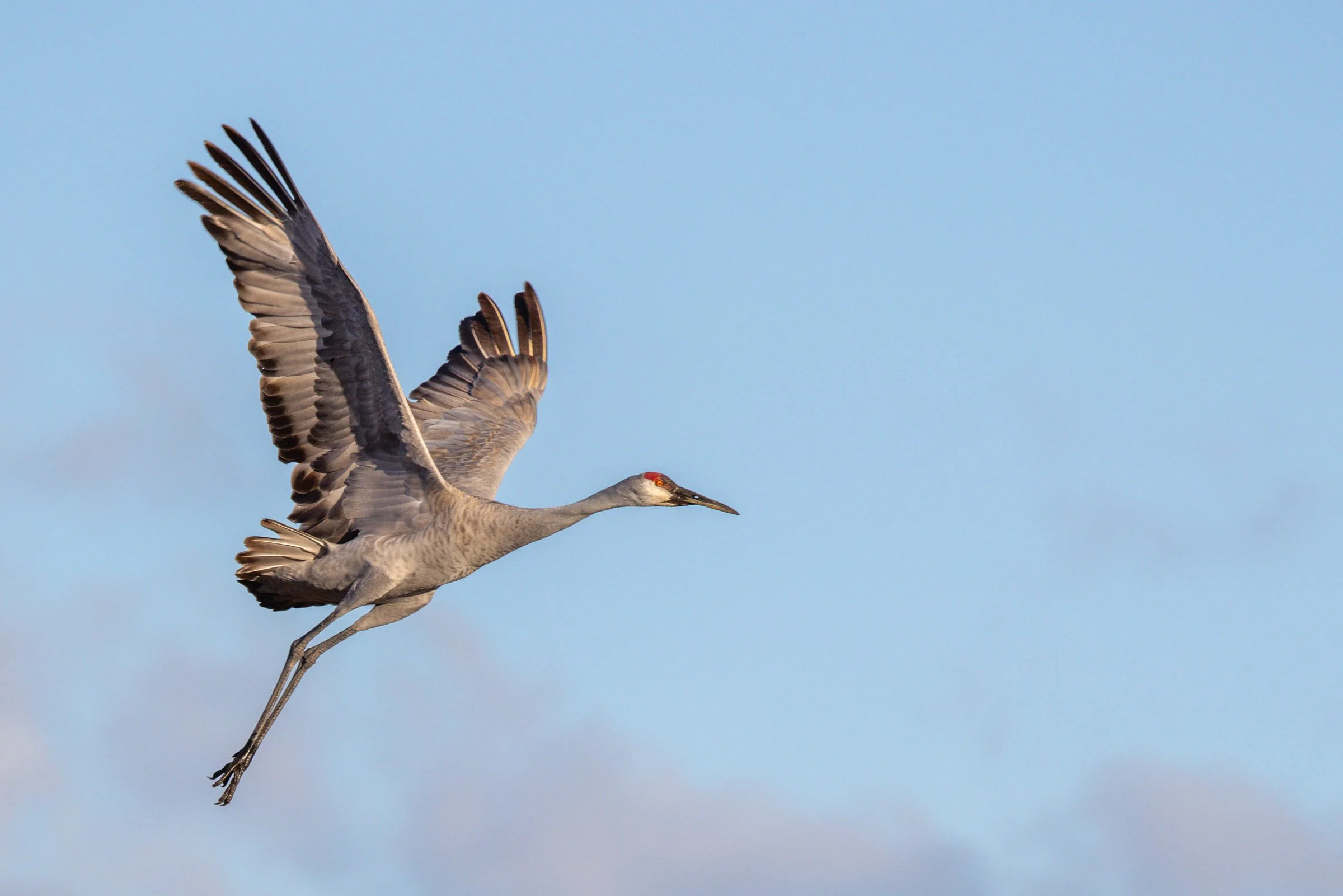
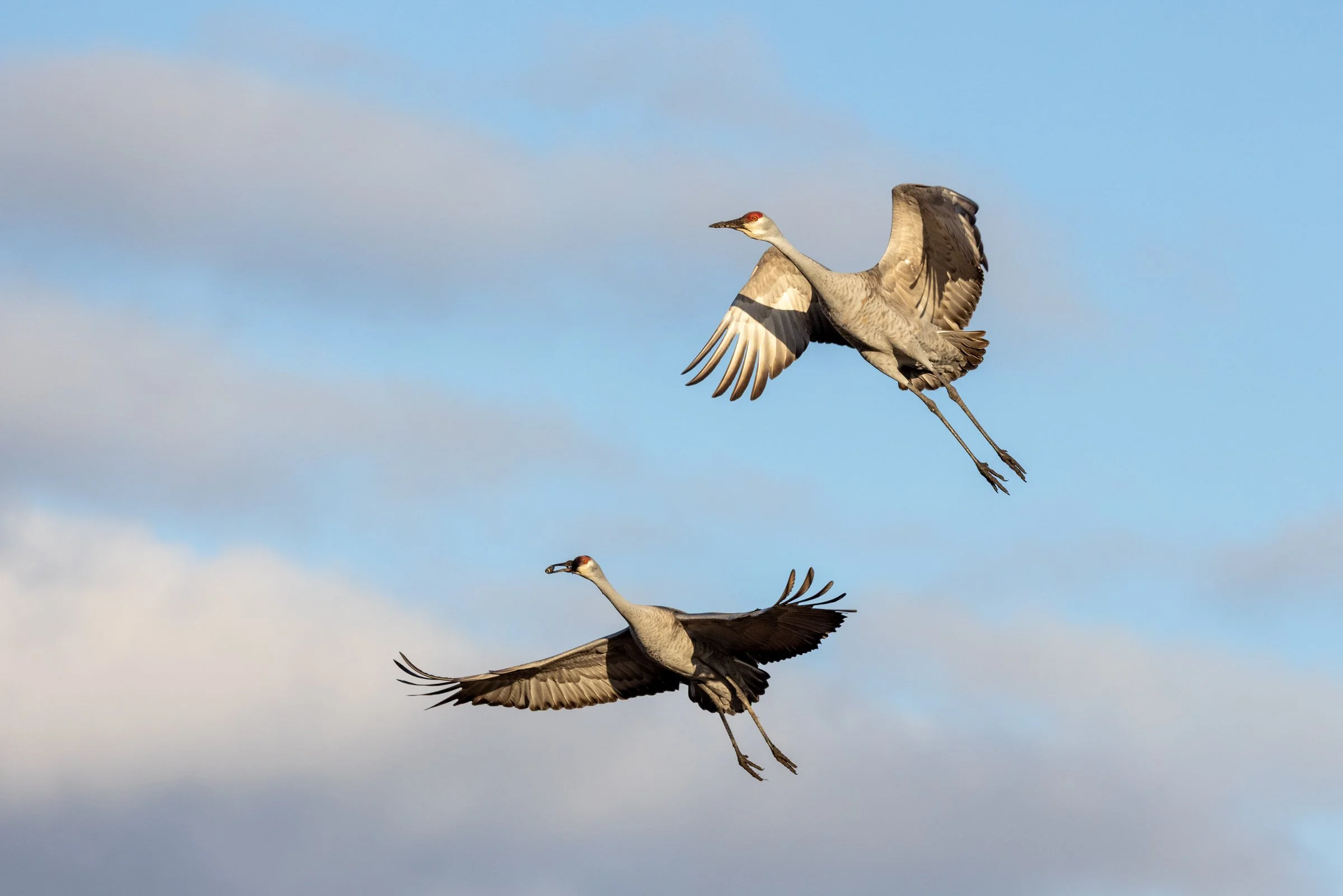
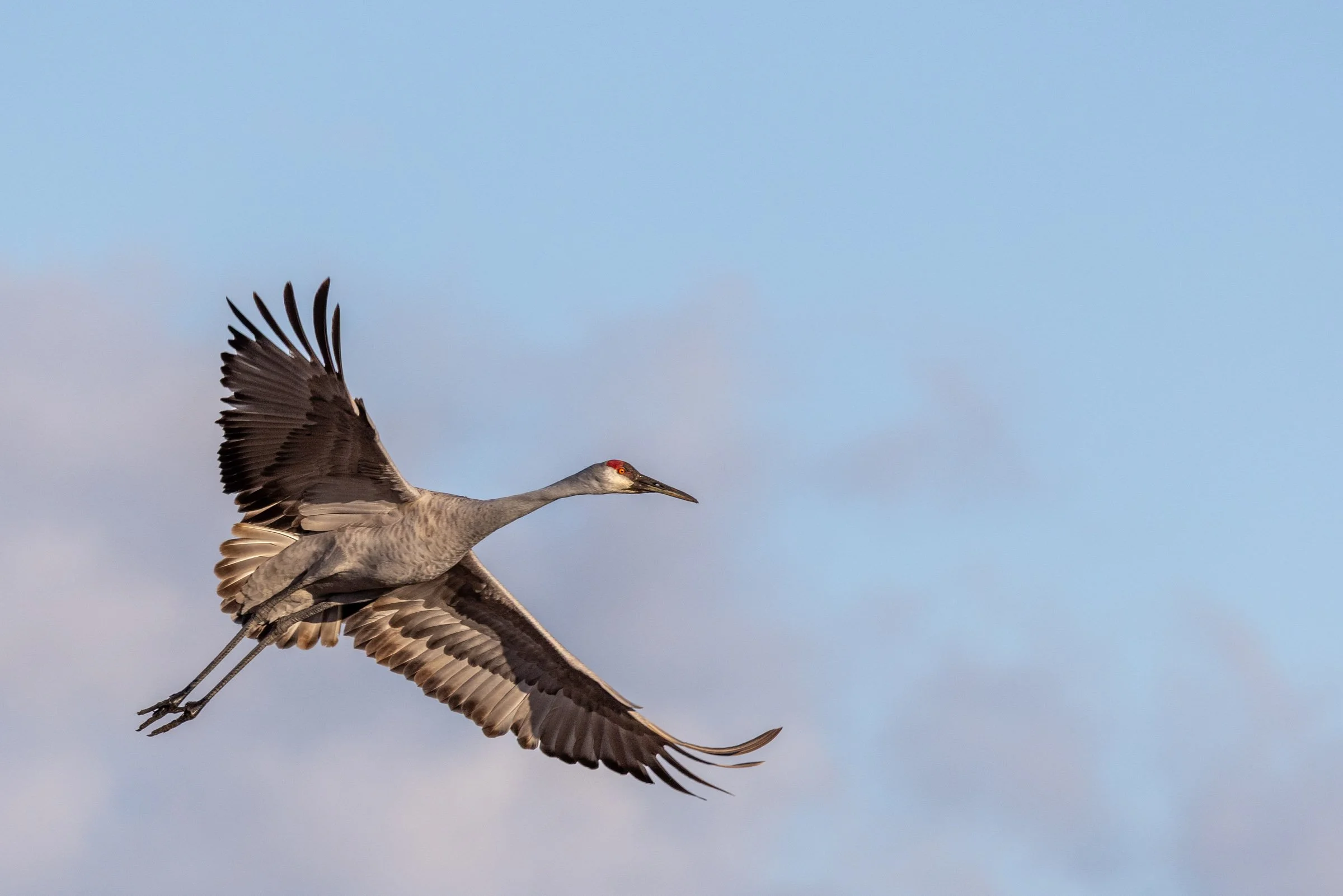
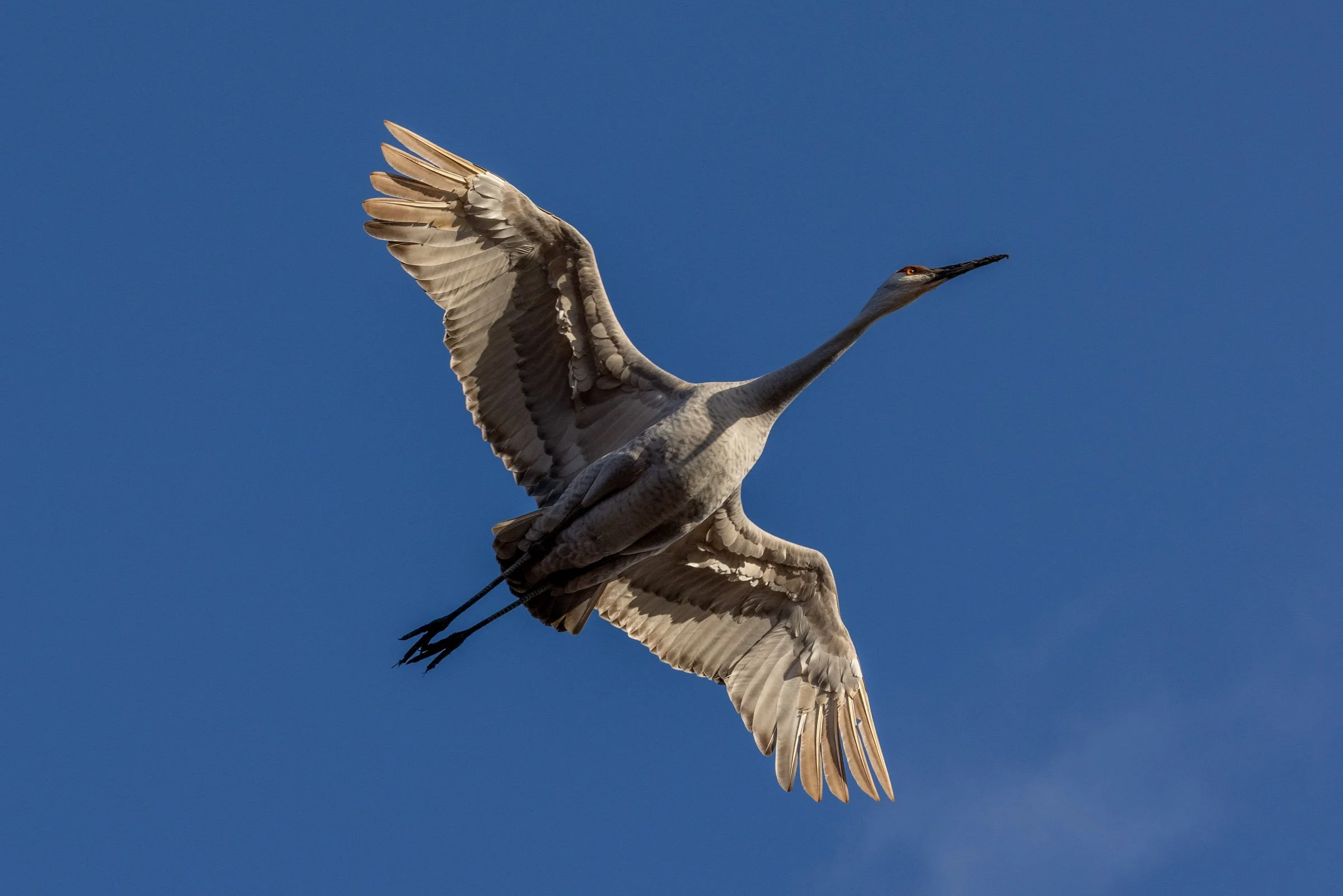
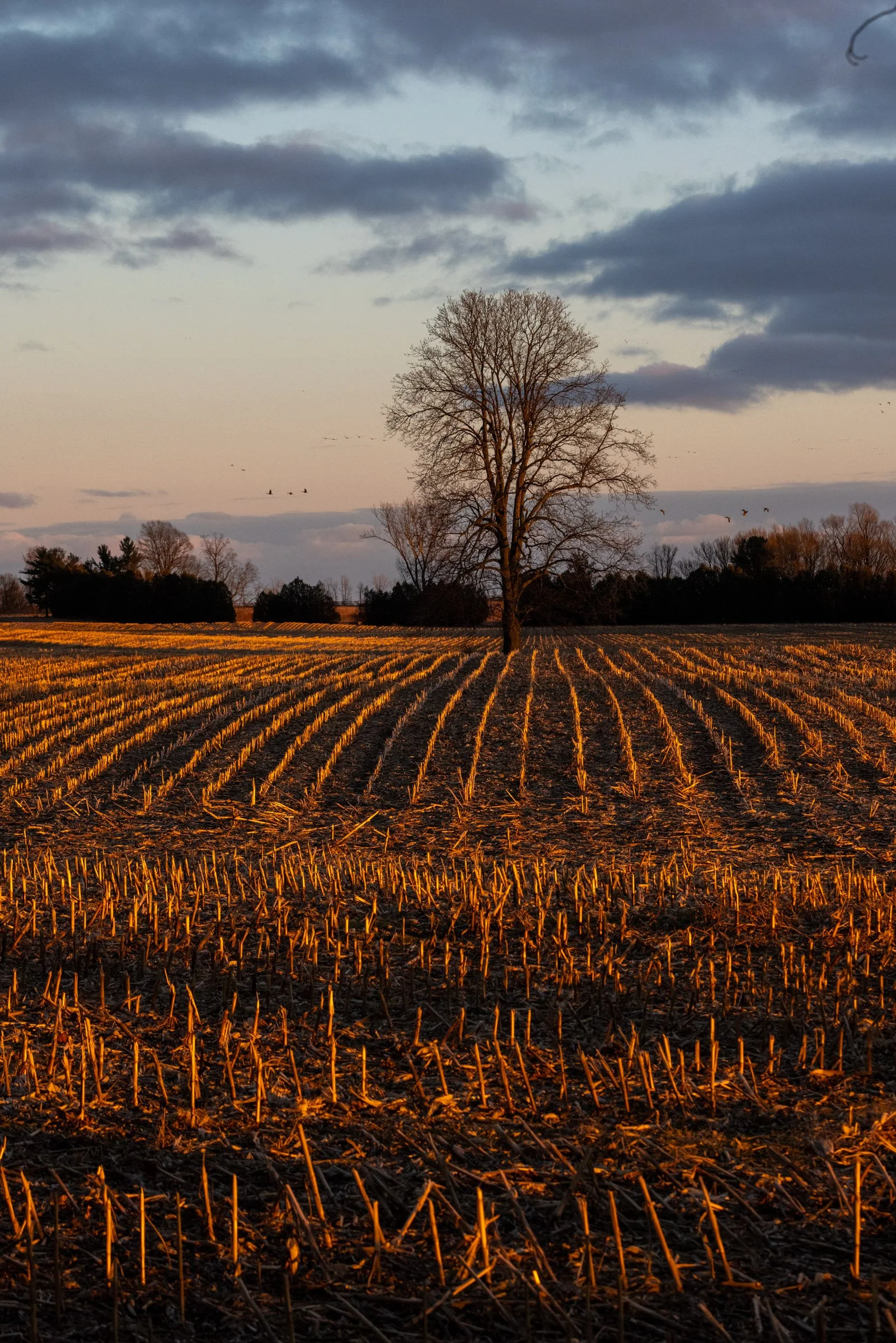
At Long Point, Sandhill Cranes gather where conditions align. Positioned along their migratory path, the landscape offers food, shelter, and space to rest. Their social nature draws them into loose flocks, shaped by weather, movement, and season. It is this convergence that makes Long Point a place of return.